
Reports
Fashion merchandising meets conversational discovery
A framework for treating conversation as a merchandising surface, without pretending conversation replaces buyers.
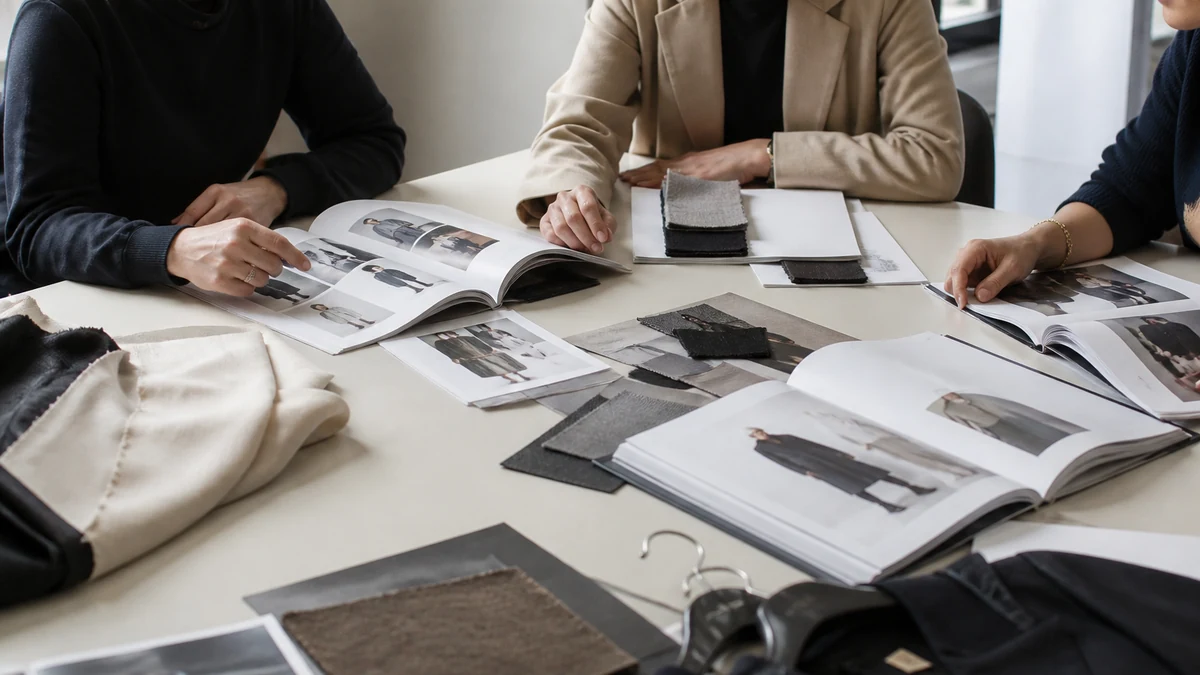
This brief is a decision framework for fashion and visual-commerce teams. It is not a survey, not a paid research study, and it does not contain invented sample sizes or industry-wide conversion averages. The question it answers is practical: when should conversation be treated as a merchandising surface rather than as a support widget parked in the corner of a theme?
Fashion merchandising already encodes look, season, and story in collections, lookbooks, and buying plans. Conversational discovery asks the same system to listen in natural language and answer with in-catalog products. The work is to connect those two disciplines without pretending conversation replaces buyers.
What conversation changes
Search boxes reward shoppers who already know the catalog’s words. Conversation can accept occasion, recipient, and style direction. That is only an improvement if merchandising has supplied the attributes those sentences need. Otherwise the assistant will stall on the same incomplete records a filter sidebar cannot save.
The change is not that shoppers suddenly speak in SKUs. The change is that merchandising’s hidden work—how a midi dress is distinguished from a maxi, how “garden wedding” maps to length and fabric—has to be available as data or approved knowledge. Conversation makes missing merchandising visible. That can feel like a product defect when it is actually a catalog gap.
Decision questions for the buying team
- Which shopper questions are currently unanswered on PDPs?
- Which of those answers already exist in catalog attributes or knowledge?
- Which actions should a good answer unlock: variant, compare, try-on, or cart?
- Which collections are allowed to appear in a guided journey?
- Which lookbook items are photography only and must never be recommended?
- Who owns a miss: merchandising data, theme placement, or knowledge?
Walk those questions in a buying meeting with ecommerce in the room. If the answers are “we will know it when we see it,” you are not ready to treat conversation as a merchandising surface. You are ready to treat it as a diagnostic for catalog quality.
How merchandising stays in control
Buyers already decide what is in the assortment. Conversation should not quietly expand the assortment. Catalog-only recommendations keep the assistant inside approved products. Complete-the-look should pair SKUs you stock, not accessories from a campaign photo you never purchased.
Control also means saying no. A shopper request for a silhouette you do not sell should return the closest in-catalog options and an honest gap, not a generated garment. That discipline is commercially conservative and easier to defend to a brand director than a fluent miss.
Rules are merchandising, not prompts
Priorities such as in-stock first, stay inside a collection, and suppress gift cards belong in portal controls. They should not live in an unreviewed instruction someone typed once. See Catalog-Only Recommendations and Complete the Look for the product surfaces that make those constraints real.
If pairing is enabled against lookbook props, you have expanded the assortment without a buying decision. If attributes for occasion and length are missing, conversation cannot become a merchandising surface—it becomes a diagnostic. Fix data first.
Where conversational discovery belongs in the journey
Exploration, narrowing, evaluation, and a product or cart step. If a conversation ends in a paragraph of styling advice with no SKU, you have built a magazine, not a store assistant. Conversational Product Discovery is the product page for intent-led routes that still resolve to inventory.
- Exploration: the shopper describes occasion, recipient, or style direction.
- Narrowing: available attributes reduce the set (length, color family, product type).
- Evaluation: known differences among in-catalog options, not invented quality ranks.
- Decision: a PDP, variant, eligible try-on visualization, or cart step the shopper can verify.
A workshop on one seasonal drop
Walk one seasonal drop with merchandising and ecommerce in the same meeting. Map five shopper missions to five SKUs. Mark data gaps. Then evaluate WardrobeIt against that map, not against a generic chatbot checklist. Missions should sound like shoppers (“black tie guest, not a ballgown”) rather than like filters (“product_type:dress”).
For each mission, write the catalog field required. If the field is missing, the work is merchandising. If the field exists but the widget is not on the template, the work is implementation. If the field exists and the widget is present but policy language is wrong, the work is knowledge.
Failure modes this brief is meant to prevent
- Treating the assistant as a replacement for buying.
- Asking conversation to compensate for unpublished products or empty size curves.
- Briefing leadership with a conversion percentage this page does not contain.
- Letting lookbooks define pairing for items you do not sell.
Conversation is not a new buying team
Buyers still decide what exists. Conversation reveals whether shoppers can find it. If a mission cannot be answered, the backlog is attributes, images, collections, knowledge, or embed—not a request for a more charming model. Catalog-only recommendations keep the assistant from filling gaps with another store’s products. Catalog-Only Recommendations.
Complete-the-look is merchandising infrastructure. If pairing is enabled against lookbook props, you have expanded the assortment without a buying decision. Keep pairing on SKUs. Complete the Look.
How to use this brief
Print the decision questions. Answer them with URLs to live PDPs, not with opinions. When the map is honest, continue with Fashion, How it works, and the Comparison Library if you are still placing WardrobeIt among other tools. Implementation sequence remains Getting Started.
Related operator reading: catalog preparation in Guides, and Shopify Catalog Sync so the merchandising map you just made is the map the assistant actually sees.