
Product features and specifications
Explain supplied features and state when a requested capability is not confirmed.
Give shoppers fast, store-specific guidance while they compare products, check sizes, review materials, understand delivery, and decide whether to add an item to cart.

Store-specific guidance brings the active product, shopper request, page context and approved information into the same buying decision.
“Which works better for a daytime wedding?”
Compare the relevant product details, fit notes and approved occasion guidance. Explain differences without inventing a benefit.

Which works better for a daytime wedding?
Compare the relevant product details, fit notes and approved occasion guidance. Explain differences without inventing a benefit.
“How should I choose my size?”
Review the product measurements, size guide and merchant fit notes. Clarify the shopper’s preferences without guaranteeing fit.
How should I choose my size?
Review the product measurements, size guide and merchant fit notes. Clarify the shopper’s preferences without guaranteeing fit.
“What is this made from?”
Use the approved composition and construction information. State when the merchant has not supplied a requested detail.
What is this made from?
Use the approved composition and construction information. State when the merchant has not supplied a requested detail.
“When could this arrive?”
Ask for the relevant destination and use approved delivery information. Confirm a date only where the connected merchant or checkout data supports it.
When could this arrive?
Ask for the relevant destination and use approved delivery information. Confirm a date only where the connected merchant or checkout data supports it.
“What if the size is not right?”
Explain the approved exchange and return conditions. Route account-specific exceptions through the configured merchant-support workflow.
What if the size is not right?
Explain the approved exchange and return conditions. Route account-specific exceptions through the configured merchant-support workflow.
“How should I care for this item?”
Use the merchant’s care instructions and handling guidance. Avoid assuming that similar-looking materials have identical care requirements.
How should I care for this item?
Use the merchant’s care instructions and handling guidance. Avoid assuming that similar-looking materials have identical care requirements.
Useful product answers address the item under consideration, rather than a generic description of the category.
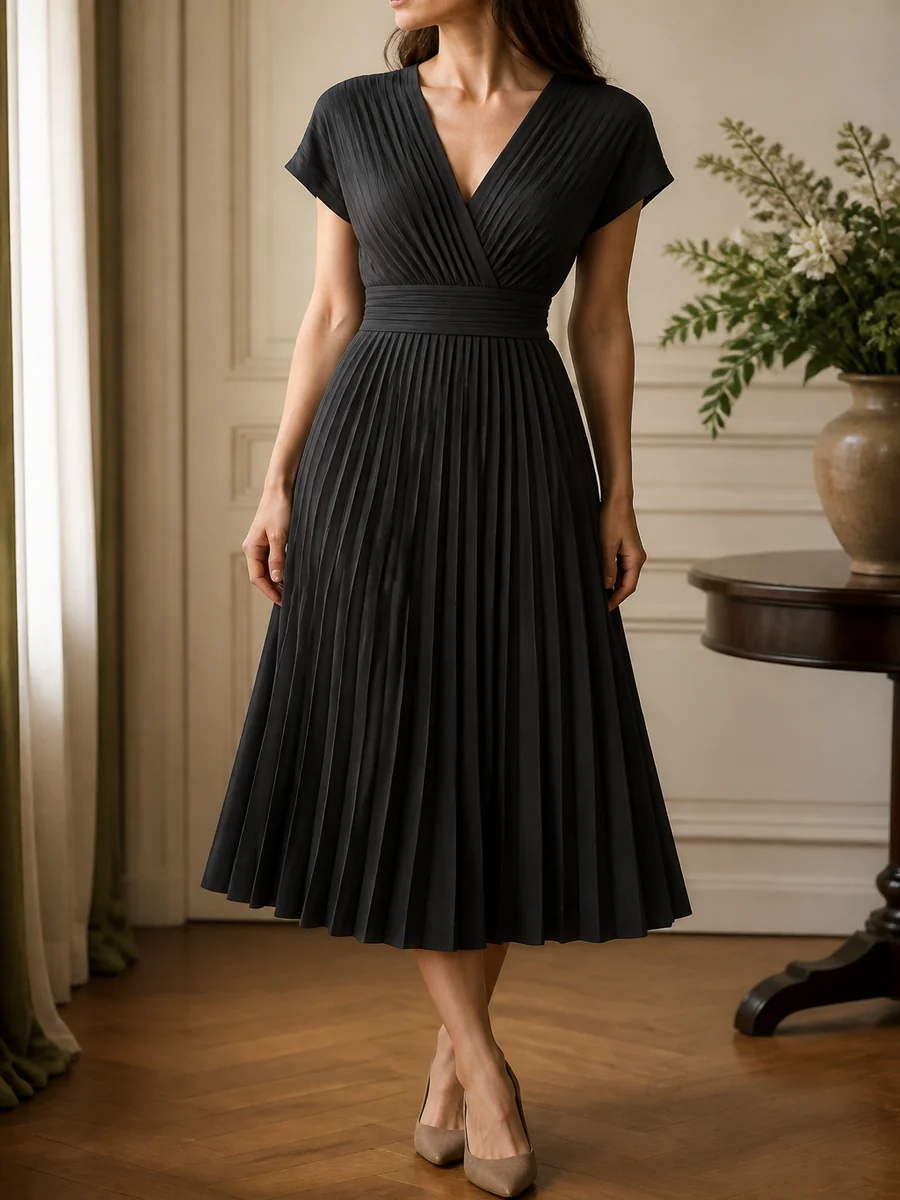
Explain supplied features and state when a requested capability is not confirmed.
Use approved fabric, ingredient, component and construction information.
Interpret connected charts, measurements, garment cuts and current product options.
Organize meaningful differences using factual product evidence.
Product fields and Merchant Knowledge determine which facts can support an answer. Missing or conflicting information should be clarified, not guessed.
Purpose, key features, intended use, merchant positioning and supplied limitations.
Color, style, fit, length, occasion, category and merchant-defined properties.
Supported configurations, market eligibility and connected variant information.
Approved composition, handling and product-care instructions.
Current connected pricing and applicable inventory, subject to commerce validation.
Approved sizing, shipping, returns, policies and store answers.
An answer can support the next decision without making the shopper restart the product journey.
Retain the active product and supported conversation context.
Identify the actual question about fit, material, delivery or policy.
Use available evidence and explain uncertainty honestly.
Offer an appropriate guide, comparison, eligible preview or support route.
Confirm the product, supported variant and requested action.
Continue only through supported cart actions and merchant validation.
Collection, product and cart moments provide different evidence. Returning-session context is used only where the enabled experience and privacy settings allow it.
“Which options suit my size and budget?”
Use the active collection and connected product information to narrow the search. Qualify actual availability before a purchase action.
“Is this fitted at the waist?”
Use this product’s fit notes, measurements and approved guidance. If the detail is missing, explain the limitation.
“Can I exchange these shoes?”
Use the merchant’s approved policy and relevant selected product context. Do not imply a policy exception has been granted.
“Where is my order?”
An account-specific request needs the appropriate authenticated order system or configured merchant-support workflow.
The next step should follow the shopper’s question and intention. It should never force an unrelated product suggestion.
Continue with the product relevant to the question.
Review meaningful differences with the same context.
Confirm a supported option before acting.
Consider another merchant-owned product where appropriate.
Explore useful complementary products.
Enter Virtual Try-On only for eligible products and plans.
Use the confirmed selection through supported integration.
Follow a technically active, configured handoff route.
Product Knowledge and Store Policies provide the foundation. Advanced answer governance remains distinct from enabled current controls.
Review sources and content before relying on a shopper-facing answer.
Use approved terminology and presentation. Advanced tone builders depend on the available setup.
Review high-frequency content and confirm how approved responses are supported.
Keep account changes, policy exceptions, disputes and unsupported claims within the appropriate merchant workflow.
Clarification, confidence thresholds and escalation controls depend on technically active capabilities. The human support route must be configured before it appears to shoppers.
WardrobeIt supports pre-purchase guidance. It complements merchant support and does not imply a complete helpdesk or authenticated order-management replacement.
Use merchant-approved information when the required source is available and the question is repeatable.
Request the missing product, size, destination or policy detail that changes the answer.
Route account-specific changes, refund approval, damaged-order claims, policy overrides and specialist decisions through an enabled merchant workflow.
Question and action events describe supported participation. Associated cart or order activity alone does not establish incremental impact.
Review answered questions and time to the next supported action.
Inspect question categories, clarification and handoff rates.
Follow size-guide use, comparisons and variant selection.
Review product clicks, alternatives and eligible Try-On starts.
Follow supported variant confirmations and cart additions.
Use repeated questions to review missing fit notes, care details and policy clarity.
Supported question trends can reveal a product-information problem worth reviewing, without treating every interaction as market-wide demand.
Review recurring size, fit, material, care, suitability, color and feature concerns.
Find the product or policy information the current sources do not provide.
Investigate repeated concerns around fit, delivery and returns before deciding what to improve.
A useful review covers both what the assistant can answer and how it handles a question the store cannot yet support.
Review the Shopify catalog, variants, attributes, sizing and care information.
Include approved shipping, returns, exchanges and store guidance.
Confirm the active presentation, restrictions and support routes.
Try product, collection, comparison, cart, delivery and return situations.
Check the source, honest uncertainty, useful action and safe escalation.
Inspect repeated questions, content gaps, hesitation and supported cart activity.
A conversational assistant that answers shopper questions about products, sizing, materials, variants, delivery, returns, care, and store policies using merchant-approved information.
No. When reliable information is unavailable, WardrobeIt should state the limitation, ask for clarification, or use an approved fallback.
Yes, when current connected variant and availability data supports the answer.
Only when the connected merchant or checkout information supports that promise. Otherwise it should explain the approved delivery guidance and limitations.
Account-specific order tracking requires the appropriate authenticated order system or merchant-support workflow and should not be implied unless connected.
No. It automates common pre-purchase questions while sensitive, complex, account-specific, or exception-based issues may still require human judgment.
Yes, when the merchant has configured a supported handoff route. The live experience should show only technically active workflows.
Supported reporting can include question volume, common topics, unanswered questions, product hesitation, next actions, requested variants, and Q&A-assisted cart activity.
Connect WardrobeIt with your catalog and merchant knowledge to resolve pre-purchase uncertainty, guide the next action, and reveal what shoppers still cannot find.