
How to Reduce Buying Hesitation Before Checkout
Reduce pre-checkout hesitation by clarifying products, policies, comparisons, outfit context, and next steps while preserving honest limits around fit, outcomes, and availability.
Buying hesitation is not always a checkout problem. It often begins earlier, when a shopper cannot tell whether a product suits the occasion, how two items differ, what completes the outfit, or where to verify an important policy.
Reducing hesitation means improving the quality and timing of decision support. It does not mean manufacturing urgency or promising certainty the product information cannot provide.
Identify the decision that is still unresolved
A shopper who pauses on a product page may be weighing several different questions. Treating every pause as price resistance leads to blunt tactics. The unresolved decision could concern product relevance, comparison, styling, trust, delivery, returns, or variant availability.
Common pre-checkout questions include:
- Is this appropriate for the event or use I have in mind?
- What is the difference between this item and a similar one?
- Which color or variant is currently available?
- What can I wear with it from this store?
- What do the material and care details say?
- Where can I confirm shipping, returns, or another store policy?
The interface should help answer the actual question, not interrupt with a generic discount message.
Strengthen the product page foundation
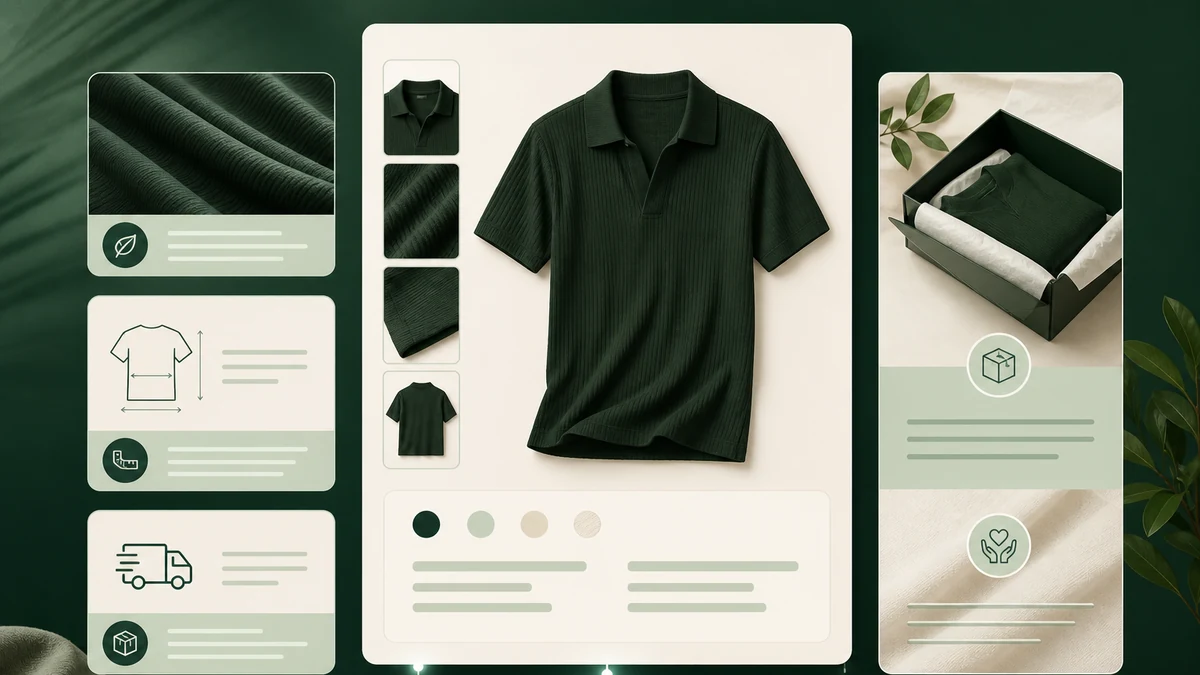
Decision support begins with accurate, scannable product content. Titles, imagery, descriptions, variant labels, price, availability, materials, care, and other documented attributes should agree. If important information appears only in an image or an inconsistent tab, both customers and connected tools may miss it.
Use headings and lists to separate facts from merchandising language. Make policy links easy to locate. Avoid burying limitations or care requirements. Clear information may not remove every concern, but it prevents avoidable uncertainty.
Offer relevant comparison, not more choice
When a shopper is deciding between products, a larger grid can increase cognitive load. A useful comparison highlights a small number of known differences that relate to the stated need.
For example, compare documented material, length, closure, color options, price, or care instructions. Do not infer comfort, durability, or fit unless the source explicitly supports the wording. If the catalog lacks a comparison fact, label the gap rather than filling it.
Use conversation to preserve context
A shopping assistant can let the customer ask a specific question without abandoning the product path. It can also preserve earlier context, such as occasion and budget, while presenting catalog options.
WardrobeIt’s AI Shopping Assistant is designed to help shoppers explore and evaluate the merchant’s own inventory. The catalog-only boundary matters because outside recommendations would create a new decision path rather than helping complete the current one.
Help shoppers see the product in context
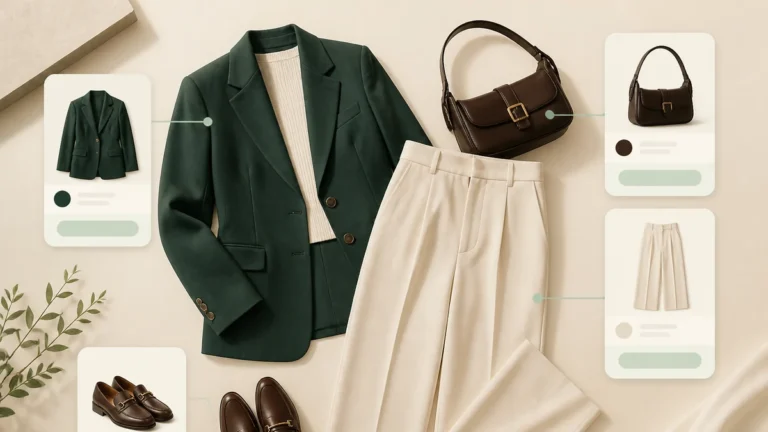
Fashion decisions are relational. A customer may like one item but hesitate because they cannot imagine a complete look. Showing suitable complementary products from the same catalog can make the next decision more concrete.
The combinations should remain explainable and available. WardrobeIt’s Complete the Look supports outfit exploration using merchant inventory. It is a merchandising and discovery aid, not a universal statement about taste.
Use visualization with precise expectations
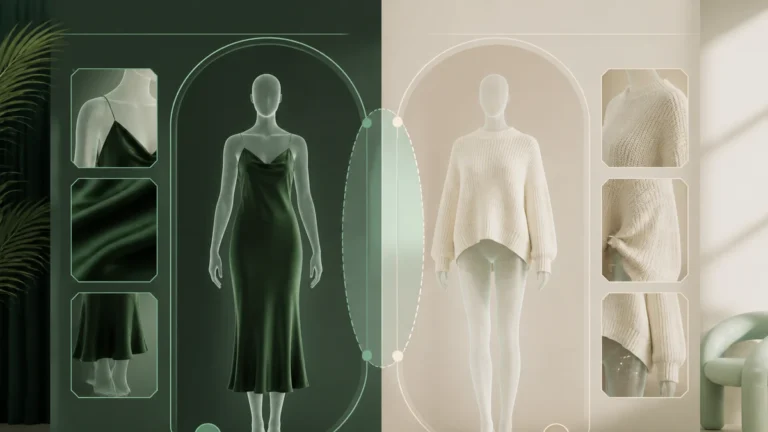
Virtual Try-On can help a shopper visualize an eligible product and may support exploration. It cannot establish exact size, physical drape, comfort, or guaranteed fit. Those limits should be visible near the experience, not hidden in distant copy.
Provide an easy route back to product details and applicable size information. Do not replace measurement guidance or return-policy information with a visualization. See WardrobeIt’s Virtual Try-On overview for the eligible-products framing.
Answer store questions without confusing sources
Questions about shipping, returns, or store policies require approved merchant knowledge rather than product attributes. Keep those sources current and distinguish them from catalog facts.
If the system cannot access order-specific information, it should not imply that it can. Pre-purchase policy guidance and post-purchase account support are different jobs. Clear routing protects trust.
Remove interaction friction
Even good guidance fails if it blocks the page. The experience should be optional, readable, responsive, and easy to dismiss. Product links and actions should have clear labels. Keyboard focus, touch targets, and contrast should support accessibility.
When an eligible add-to-cart action is available inside an assistant, the shopper should still see the selected product and variant clearly. The Add to Cart from the Assistant page describes that shorter path.
Measure hesitation responsibly
No single metric proves confidence. Combine behavioral and qualitative signals: repeated comparisons, unanswered questions, rapid product switching, variant dead ends, return-policy visits, conversation abandonment, and feedback themes.
Orders associated with assistant interactions can be reported as assisted revenue under defined rules, but that observation does not establish incremental lift. Use Usage and Outcome Analytics to understand participation and patterns, then validate hypotheses through appropriate analysis.
A practical confidence audit
- Choose ten high-traffic or high-consideration products.
- List the five questions most likely to delay each purchase.
- Locate the approved source for every answer.
- Fix missing or inconsistent product and policy content.
- Test discovery, comparison, visualization, and handoff paths.
- Review unresolved questions regularly with merchandising and support.
Make the next decision easier
Reducing buying hesitation is not about pressuring a customer toward checkout. It is about making product evidence easier to find, acknowledging uncertainty, and preserving context across the journey.
Start with the questions customers already ask, improve the source information, and add guided support where it shortens the route to an informed choice. Explore WardrobeIt’s Reduce Buying Hesitation solution or book a demo to discuss the current experience.