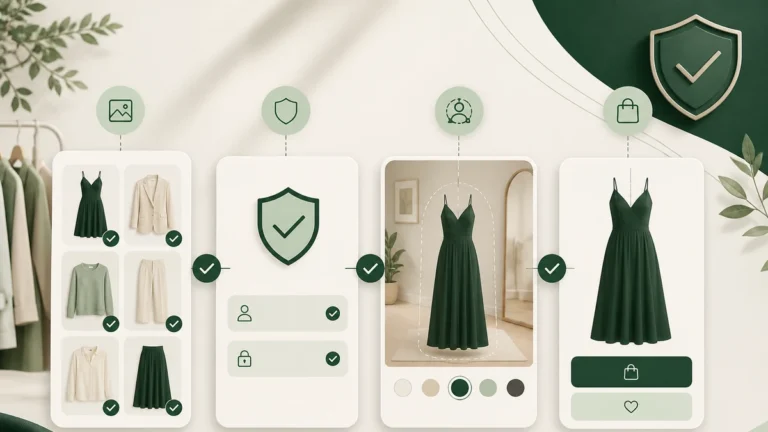

Complete the Look: Building Higher-Confidence Outfits From Your Own Catalog
Build useful outfit recommendations from your own fashion catalog by combining merchandising logic, product truth, availability, conversational context, and transparent measurement.
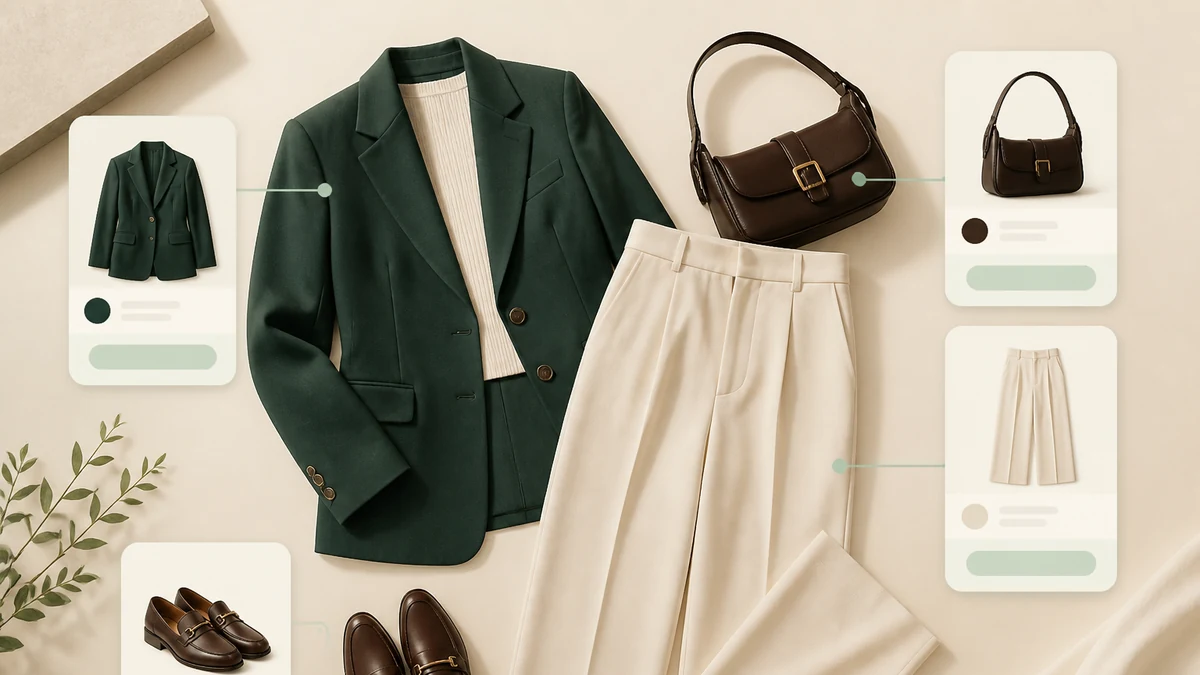
“Complete the Look” turns a single-product decision into an outfit conversation. Done well, it helps shoppers understand how items in the same catalog can work together and gives merchandisers another way to express assortment relationships.
Done poorly, it becomes a generic cross-sell row. The difference is relevance, explainability, availability, and respect for the shopper’s stated context.
Start with the shopper’s unfinished question
A shopper viewing a blazer may not need more blazers. They may need trousers for a work event, a top that changes the level of formality, or an accessory that connects the colors. The complementary need depends on the focal item and the mission.
Useful outfit guidance should answer questions such as:
- What category is missing from the look?
- Which available items are compatible with the known request?
- What documented details explain the relationship?
- Does the suggestion preserve budget, color, occasion, or other stated constraints?
- Can the shopper inspect each product before acting?
Keep recommendations inside your catalog
A merchant cannot sell an inspiring item that belongs to another store. Catalog-only outfit building keeps every suggested component tied to actual merchant products, product pages, variants, and availability.
WardrobeIt’s Complete the Look is designed around the connected assortment. Its purpose is not to search the wider web or generate imaginary products. When the catalog has no defensible complement, the experience should not fabricate one.
Build the product-data foundation
Outfit relationships depend on consistent source information. Review product type, category, color, material, silhouette, occasion, season, price, variants, availability, and imagery where those fields are documented.
Not every relationship needs every attribute. A color-led accessory recommendation differs from a layer chosen for category and occasion. Define which facts matter to each merchandising use case instead of scoring every product by an opaque universal formula.
The Shopify Catalog Sync makes connected product information available to WardrobeIt. It does not invent missing metadata or resolve inconsistent merchandising rules automatically.
Use a combination of rules and context
Category compatibility
Start with structural relationships: top with bottom, dress with outer layer, footwear with outfit, or focal garment with accessory. These relationships should reflect the categories the store actually carries.
Known product attributes
Use documented details to narrow or explain choices. Color family, material, length, pattern, and formality can help when consistently supplied. Avoid unsupported statements about comfort, body shape, or personal suitability.
Shopper intent
Conversational context can change the recommendation. A blazer for a formal presentation may need different complements from the same blazer styled for a weekend. Preserve known constraints rather than restarting from the focal product alone.
Availability and variant state
An outfit is not actionable if key items are unavailable. Confirm current product and variant information through the connected catalog, and provide graceful alternatives when the set changes.
Design the experience for comparison
Show the focal item clearly and identify the role of each complement. Let shoppers open product details, check variants, and remove or replace parts of the look where supported. Avoid visual clutter that makes the recommendation harder to understand than a collection page.
Explain relationships in short, factual language. “Uses the same documented navy color family” is more defensible than “the perfect match.” Style can be subjective, so recommendations should remain suggestions.
Connect outfit guidance to conversation
A static module cannot know every mission. Conversation allows the shopper to refine by occasion, preferred categories, budget, or other usable constraints. WardrobeIt’s Conversational Product Discovery can preserve that context while exploring the catalog.
Follow-up questions should only collect information that can change the available set. If the catalog does not contain a formal classification, asking for one may create the appearance of personalization without a grounded effect.
Avoid common recommendation failures
- Near duplicates: Recommending another focal product instead of a complement.
- Unavailable anchors: Building a look around a product or variant the shopper cannot select.
- Unsupported claims: Calling combinations universally flattering, perfect, or guaranteed.
- Context loss: Ignoring the shopper’s occasion, budget, or earlier preferences.
- Outside inventory: Suggesting products the merchant does not sell.
- Forced bundles: Hiding individual product details or implying the full set is required.
Measure merchandising quality
Review impression, engagement, product-detail follow-through, substitutions, unresolved requests, and associated cart or order journeys. Pair aggregate metrics with qualitative inspection of actual recommendation sets.
An order associated with Complete the Look participation can inform assisted-revenue reporting, but it does not establish that the recommendation caused incremental value. Changes in traffic, assortment, season, pricing, and placement can affect the observation.
The Usage and Outcome Analytics page describes WardrobeIt’s observational reporting posture.
Create a merchant review loop
- Select key focal products or categories.
- Define the complementary roles that matter.
- Audit the attributes needed to support those roles.
- Test common shopper missions and difficult edge cases.
- Review weak or unavailable combinations with merchandising.
- Update catalog information and rules, then retest.
Include support and ecommerce teams in the review. Their customer questions and journey data can reveal relationships that a merchandising taxonomy alone misses.
Build confidence through relevance
Complete the Look works when it helps a shopper make sense of the assortment. It should connect a focal product to a small, useful set of available complements and explain the relationship without presenting taste as fact.
Start with one category and a handful of real outfit missions. Strengthen the catalog information, preserve conversational context, and evaluate recommendations as a merchandiser would. Explore WardrobeIt’s Increase Average Order Value solution for a catalog-only approach to outfit discovery—without a promised basket-size outcome.