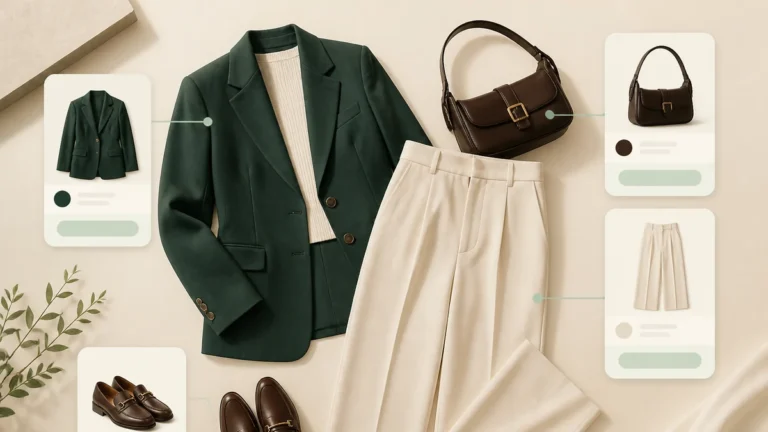

Ecommerce Conversion Without More Traffic: Fix the Onsite Decision Gap
Before buying more traffic, examine the onsite decision gap: weak discovery, missing product context, unanswered questions, and friction between interest and confident action.
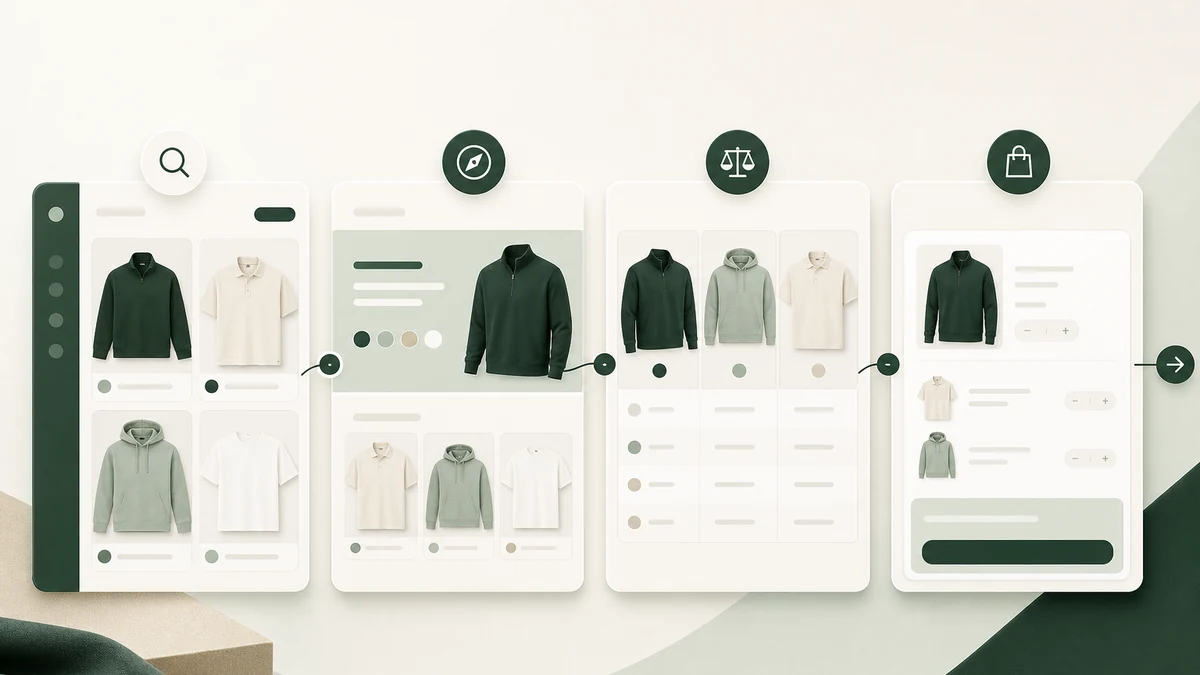
More traffic cannot repair a storefront that leaves product decisions unresolved. If shoppers struggle to find relevant items, compare options, understand details, or complete a look, additional acquisition simply feeds the same onsite friction.
Before increasing spend, examine the decision gap between landing and confident action. The opportunity is not a guaranteed conversion lift; it is a clearer, more useful buying journey.
What is the onsite decision gap?
The decision gap is the distance between a shopper’s intent and the evidence needed to choose. It appears when the storefront has products but does not help the customer connect those products to a real need.
The gap can occur at any stage:
- Discovery: The shopper cannot translate a mission into catalog language.
- Narrowing: Search, collections, or filters leave too many or too few options.
- Evaluation: Product details are missing, inconsistent, or difficult to compare.
- Context: The shopper cannot see how an item works with the rest of a look.
- Action: The path from guidance to the correct product or variant is unclear.
Why traffic metrics can hide the problem
Acquisition reporting explains where visits originate and what they cost. It does not automatically explain why a customer leaves after reaching the store. Aggregate conversion rates can also blur major differences among categories, devices, campaigns, and shopper missions.
Look beneath the summary. A campaign may attract appropriate shoppers while the landing collection uses unfamiliar taxonomy. A product may receive engagement while the variant or policy information needed for a decision is difficult to find. The traffic is not necessarily wrong; the onsite path may be incomplete.
Diagnose the gap with evidence
Review search and discovery behavior
Inspect zero-result queries, low-engagement result sets, repeated reformulations, filter dead ends, and quick returns to collection pages. Read the language shoppers use and compare it with product titles, descriptions, types, tags, and collections.
Review product questions
Support tickets, chat transcripts, product reviews, and onsite questions can reveal missing decision information. Group questions by source: product fact, styling context, store policy, availability, or information the business cannot responsibly answer.
Review journey transitions
Examine how shoppers move from a campaign or collection to product details, related items, and cart actions. A high-exit page is not automatically defective, but repeated friction patterns deserve qualitative inspection.
Close discovery gaps first
A shopper cannot evaluate a product they never find. Improve catalog consistency, synonym coverage, collection structure, and high-value attributes. Then consider a conversational route for customers whose intent does not fit a short keyword query.
WardrobeIt’s Conversational Product Discovery helps shoppers express occasions and preferences in natural language, while catalog-only recommendations keep options inside the connected store inventory.
Turn product pages into decision pages
Product pages should make known facts easy to verify. Prioritize clear imagery, variant state, price, availability, materials, care, dimensions or size information where supplied, and relevant policies. Keep merchandising language distinct from objective attributes.
When comparison is useful, highlight a few documented differences. When the shopper asks a question, answer from the product record or approved store knowledge. When information is missing, make that boundary explicit.
Support outfit-level context
Fashion purchases often depend on what surrounds the focal item. A customer may hesitate on trousers because they cannot identify an appropriate top, or abandon a dress because the styling path feels incomplete.
Complete the Look can help surface complementary pieces from the merchant’s catalog. The purpose is to support exploration and confidence, not to force a larger basket or claim that every suggested combination is personally ideal.
Shorten the path to action carefully
Once a shopper has selected a product and variant, unnecessary repetition creates friction. A shopping assistant can preserve context and, where supported, provide a clear path toward cart. Product identity, price, and variant should remain visible so the action is informed.
Do not optimize only for fewer clicks. A short path that hides critical information is not an improvement. The appropriate path balances efficiency with verification.
Build a responsible measurement model
Use a hierarchy of signals rather than one headline figure:
- Availability: Was the experience offered and technically usable?
- Engagement: Did shoppers begin and continue meaningful interactions?
- Quality: Were relevant products shown and questions answered from approved sources?
- Progression: Did shoppers reach product details, eligible cart actions, or another appropriate destination?
- Outcomes: Were orders observationally associated with assistant participation under a documented rule?
WardrobeIt’s Usage and Outcome Analytics is designed to help merchants inspect participation and outcomes. Causal or incremental claims require additional analysis beyond association.
Run a four-week onsite improvement cycle
Start with one important category. In the first pass, collect shopper language and unresolved questions. Next, repair product content and taxonomy. Then test guided discovery and product guidance against real missions. Finally, review interaction quality and journey progression with merchandising, ecommerce, and support stakeholders.
Keep a visible issue log. Separate source-data gaps from interface problems and system behavior. This prevents teams from solving the wrong layer.
Earn more from the traffic you already have
Improving onsite decisions is not a promise of a particular conversion result. It is disciplined work to make existing demand easier to serve. Better discovery, clearer evidence, useful context, and honest handoffs reduce avoidable friction regardless of acquisition volume.
Before funding the next traffic increase, test whether customers can complete ten representative shopping missions with the information currently available. Use WardrobeIt’s Increase Ecommerce Conversion overview to explore a catalog-grounded decision-support approach.