
What Is an AI Shopping Assistant for Ecommerce?
Learn how ecommerce shopping assistants guide product discovery, answer catalog questions, and support confident decisions without sending shoppers beyond a merchant’s inventory.
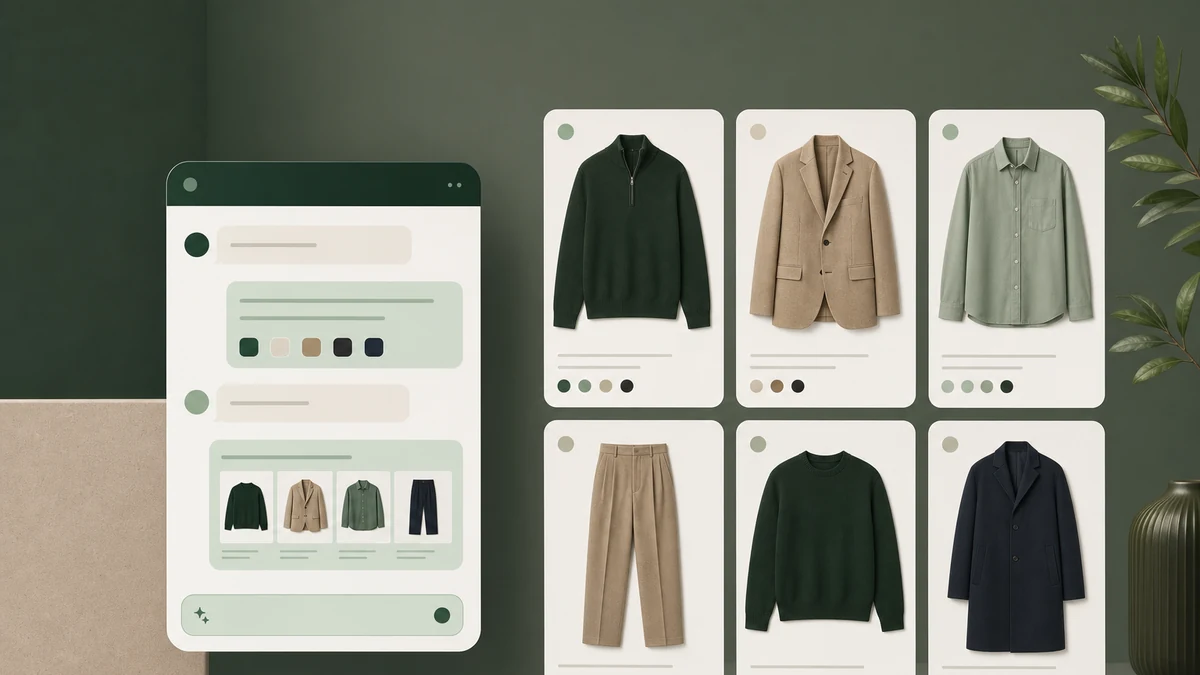
An AI shopping assistant is an onsite guide that helps a shopper move from a broad need to a relevant product decision. Instead of requiring the shopper to translate intent into perfect search terms, it can accept natural questions, use available catalog information, and keep the conversation focused on items the merchant actually sells.
For fashion ecommerce, that distinction matters. A request such as “something polished for a summer work event” contains occasion, style, and season signals that a conventional keyword box may not interpret together. A shopping assistant creates a guided path through those signals without pretending to know facts that are absent from the catalog.
What an ecommerce AI shopping assistant does
The assistant sits between product search, guided selling, and product Q&A. Its job is not to replace the storefront or make decisions for the customer. Its job is to reduce the work required to understand the assortment.
A useful assistant can support several connected tasks:
- interpret conversational requests that combine product type, occasion, preference, and budget;
- surface relevant items from the connected merchant catalog;
- explain visible product details in plain language;
- compare catalog items using known attributes;
- suggest complementary pieces when the catalog supports them; and
- help the shopper continue toward a product page or cart action.
WardrobeIt is fashion-first and Shopify-first. Its AI Shopping Assistant is designed around a merchant’s own connected catalog rather than an open marketplace. That catalog-only boundary keeps recommendations commercially relevant and easier for a shopper to verify.
How it differs from ordinary site search
Traditional search usually begins with a query and returns a ranked result set. It works well when the customer knows the product name, category, or attribute used in the catalog. It becomes less effective when the request is exploratory or when the shopper uses language that differs from product titles and tags.
A conversational assistant can ask or respond to follow-up context. If “black dress” produces too many plausible options, the next turn can narrow by event, length, silhouette, or another available attribute. This makes the interaction iterative rather than forcing a new search from the beginning.
It translates intent, not inventory facts
The assistant should interpret the shopper’s words, but it should not invent material, availability, care, fit, or delivery information. Reliable guidance depends on the data supplied by the catalog and approved merchant knowledge. When a fact is unavailable, the honest response is to say so or point the shopper toward a source that can confirm it.
Where the assistant helps in the buying journey
The highest-value conversations are not limited to the first search. Questions appear throughout the decision process, and each stage needs a different kind of support.
- Exploration: The shopper describes a need, recipient, occasion, or style direction.
- Narrowing: The assistant helps reduce a broad set using known preferences and attributes.
- Evaluation: The shopper asks about differences, details, or possible combinations.
- Decision: The assistant summarizes relevant known information and points to the appropriate product or cart step.
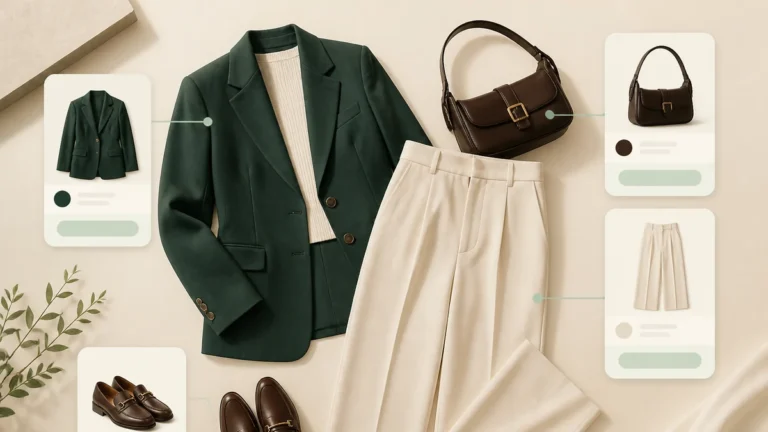
This journey is especially important in apparel, where products are often evaluated as part of an outfit rather than as isolated records. The Complete the Look experience can help a shopper consider compatible pieces from the same catalog, while the assistant preserves the conversational context.
What a shopping assistant should not claim
“AI” does not remove the need for product truth. Merchants should be cautious of experiences that imply exact fit, guaranteed conversion, guaranteed satisfaction, or complete knowledge of a customer. An assistant can organize evidence and reduce friction; it cannot eliminate uncertainty from every purchase.
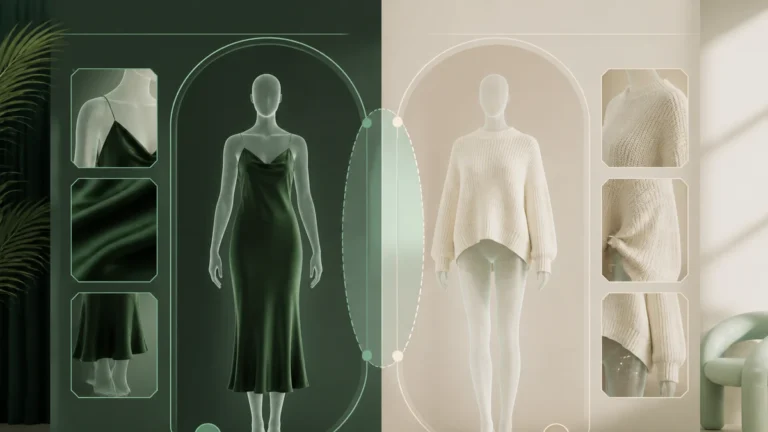
Virtual visualization is another area where wording matters. For eligible products, Virtual Try-On can help a shopper visualize an item. It is not an exact-fit assessment and should not be presented as one. Measurements, garment construction, personal comfort, and return policies remain separate considerations.
What merchants need to prepare
The quality of guidance begins with the catalog. Before launch, review product titles, descriptions, variants, images, availability, categories, and important fashion attributes. Inconsistent naming and sparse descriptions limit what any catalog-grounded system can explain.
Merchants should also identify common pre-purchase questions and decide which approved sources can answer them. Shipping, returns, care instructions, and store policies should remain clear and current. Product content and store knowledge serve different purposes, so both need ownership.
Finally, define escalation and fallback behavior. A responsible assistant should make uncertainty visible instead of filling gaps with plausible language. The Store Help and Product Q&A overview explains how approved store information can support those questions.
How to evaluate the experience
Start with interaction quality rather than a single revenue number. Review whether shoppers reach relevant products, where conversations stall, which questions cannot be answered, and whether catalog gaps recur. Outcome reporting can show participation in journeys, but it needs careful interpretation.
For example, assisted revenue can describe orders associated with an assistant interaction under the platform’s reporting rules. It is observational participation, not proof that the assistant caused an incremental sale. WardrobeIt’s Usage and Outcome Analytics is intended to help merchants examine usage and outcomes without turning association into a causal claim.
A practical definition
An ecommerce AI shopping assistant is a catalog-grounded, conversational layer that helps shoppers discover, understand, and act on products with less effort. The best implementations are useful precisely because their boundaries are clear: they work from merchant-approved information, acknowledge missing facts, and support rather than overrule customer judgment.
For a practical next step, choose several real shopping missions, inspect the catalog data each mission requires, and test whether the experience returns defensible options. If the answers are useful and traceable to your own inventory, you have the foundation for responsible guided shopping. See how WardrobeIt works or book a demo to explore that workflow.